
From Lecture Hall to Lifesaving Impact: A Week with Mission Rabies
One of the things that makes our vaccination campaigns so special is that we welcome volunteers from all backgrounds, even with little or no veterinary experience you can still be part of creating a rabies free world.
Hamish, a third-year biomedical sciences student at the University of Edinburgh, joined us during our Cambodia vaccination campaign in October 2025. His interest in public health and epidemiology, and goal to specialise in infectious diseases was partly inspired by the work of Mission Rabies. His father is also a long term supporter and had attended many of our campaigns.
Life on campaign
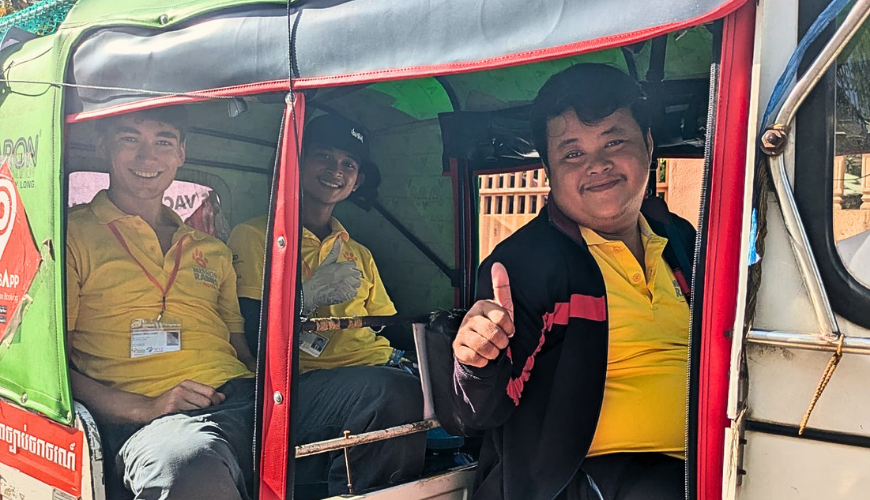
“A typical day was full on, starting at 5.30 am for breakfast at 6, followed by a swift departure at 6.30 to reach our designated hubs spread across the outer areas of Phnom Penh. It would typically take roughly an hour to reach our hub.
"Everyone was paired with a tuk-tuk driver and a local veterinary student. Although the language barrier made communication a challenge, I managed to pick up on a surprising amount of Khmer, learning to ask people if they had dogs, how many they had and whether they were male or female. While this doesn’t help very much in the typical tourist conversation, it was still great fun to learn.
"We would take about a 45-minute lunch break before cracking on again until 4 pm. I wasn’t brave enough to try the street food, but my student counterpart and driver always had what looked delicious!"
Reaching the 70% vaccination coverage needed for herd immunity required precision and persistence.
“Every dog we encountered had to be logged on the app, even if we couldn’t vaccinate them. It was essential for tracking coverage and understanding dog populations across each zone.
“The toughest day was the ‘Dragon Challenge’, set by Luke Gamble, to vaccinate 10,000 dogs in a single day. It was an enormous task, but the energy and enthusiasm across the teams was incredible, and by the end of the day, we had vaccinated 10,300 dogs, an amazing testament to teamwork and dedication.”
More than just the work
Evenings brought a chance to recharge.
“At the end of each day, everyone would share their favourite moments, which there were plenty of. I, however, almost always ended up passing out from exhaustion on the bus journey back to the hotel, catching up with my fellow volunteers over dinner. A standout feature of the trip was the rooftop bar and pool at the hotel, offering an incredible view of the city.
"I actually did more socialising than I normally would at university, which surprised me. But it was easy when surrounded by such a welcoming and friendly crowd. I really cherished those evenings.”
For Hamish, there was also a personal connection.
“It was amazing hearing how fondly people remembered my dad. Everyone was excited that his son had joined a campaign. It felt like a full-circle moment.”
Why it matters
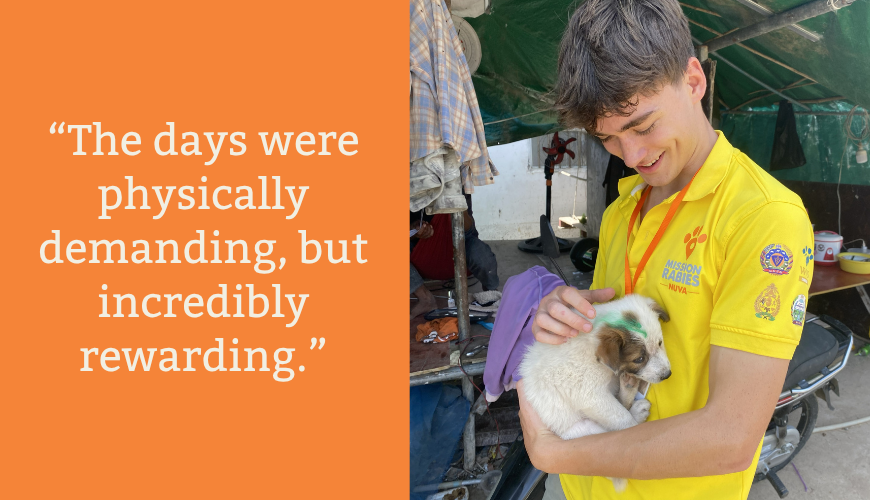
“The days were physically demanding, but incredibly rewarding. Seeing community engagement firsthand made the work feel meaningful and strengthened my motivation to pursue a career in global disease prevention.”
Rabies remains one of the deadliest infectious diseases in the world, responsible for around 59,000 deaths each year.
"What struck me even more than this, however, is that it's 100% preventable. Over 99% of cases stem from canine transmission, yet mass dog vaccination remains inaccessible in many parts of the world.
"One statistic that really stayed with me is that it’s around 50 times more expensive to vaccinate a human than a dog. This highlights just how effective and efficient these campaigns are, not only saving dog and human populations but also reducing the economic burden on healthcare systems."
From theory to reality
“Studying infectious diseases gave me the theory, but this experience brought it to life. Concepts like herd immunity, surveillance and virology became real, not just something on a slide.
"I also got an introduction to data analysis, seeing how the team uses data to improve coverage. That actually became a focus in my studies later on.”
The experience also broadened his understanding of disease control, showing how multidisciplinary the field is.
“It’s not just about vaccines or lab work — it’s about data systems, logistics, communication, and local partnerships. Without community engagement, none of this works.
"I really want to hammer home that rabies is completely preventable, but almost always fatal once symptoms appear. That is really what makes the disease so tragic."
A message to others
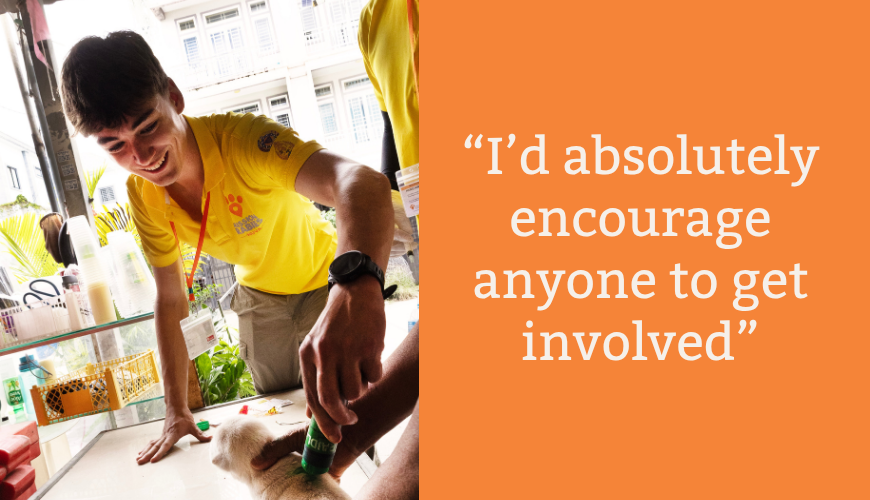
“I’d absolutely encourage anyone to get involved. You don’t need to be a professional — I certainly wasn’t — although being fond of dogs helps.
"The places you visit and the people you meet are unlike anything you’d experience as a tourist. You see communities in a much more real and raw way, and you leave feeling genuinely connected to the work you’ve done and the people you’ve met. ”
For students in particular:
“If you get the opportunity, take it. You can’t get this kind of experience sitting in a lab or behind a computer.
"It pushed me outside my comfort zone, building my confidence, adaptability and appreciation for other cultures. It also helped me become familiar with data analysis, which, whilst it sounds boring on paper, I promise you it isn’t when you see how that data helps guide decisions that ultimately save lives.”
If you’ve ever thought about getting involved, this could be your moment.
Applications are now open for Cambodia 2026 or browse all our other other incredible trips here
This is what global change looks like—people coming together.
And there’s always room for one more.